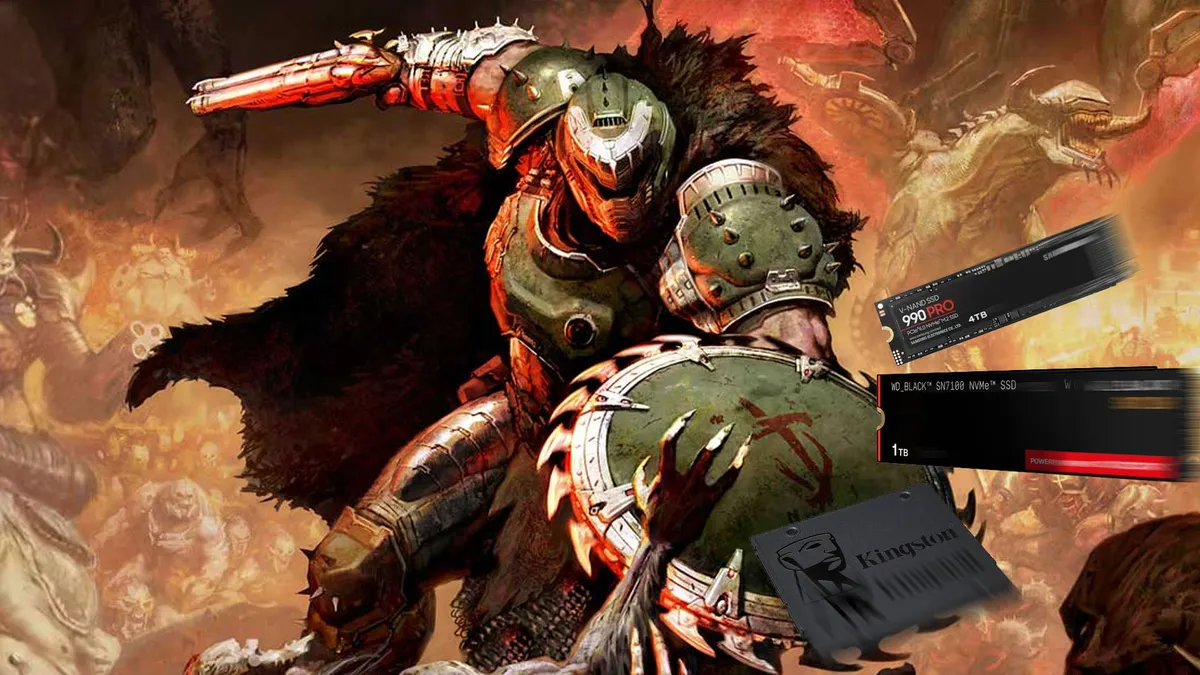
Turns out ray tracing in Doom: The Dark Ages wasn't just id Software showing off its fancy light-bouncing tech - it was also a massive dev pipeline cheat code. According to PCGamesN, by ditching pre-baked global illumination in favor of real-time ray tracing, id Software saved up to 110GB of disk space per game build.
For the uninitiated, pre-baked lighting means the studio's computers have to sit there like a render farm NPC and calculate every shadow and light bounce in advance. id Software reportedly dodged up to TWO MONTHS of rendering time for each game revision by going the ray tracing route. That's not a speedrun strat - that's an entire skip.
The trade-off nobody asked for but everyone got
Here's where the lore gets spicy. While the dev team was popping champagne over their leaner build pipeline, players with mid-range GPUs were out here watching their frame rates hit the floor harder than a demon after a Super Shotgun blast. Ray tracing is notoriously hungry - like a final boss that just refuses to die - and not every rig can keep up with Doom: The Dark Ages' real-time lighting demands.
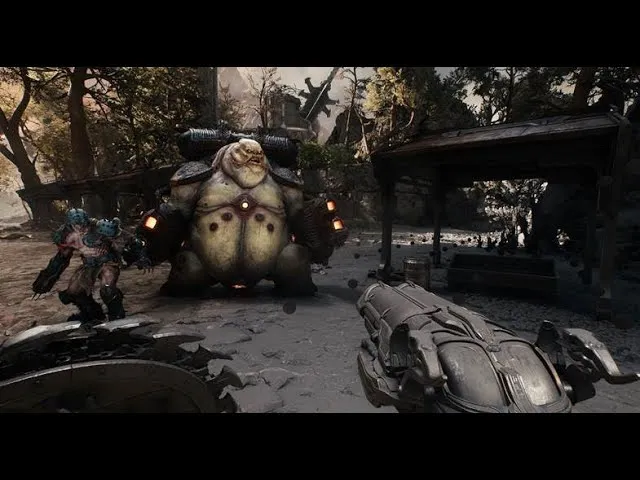
So to recap: id Software saved two months of compute time and 110 gigs of bloat per build, and in exchange, your RTX 3060 gets to experience what it feels like to be a sacrificial lamb. A fair trade? Depends entirely on which side of the GPU hierarchy you're sitting on.

Actually kind of a big deal for game development
Jokes aside, this is a legitimately interesting peek behind the curtain of AAA game development. Baked lighting has been an industry staple for decades precisely because it looks great and runs on anything, but it comes with brutal iteration costs. Every time a designer moves a wall or tweaks a level, the whole lighting process can need to restart from scratch.
By leaning into ray tracing as a core design decision rather than a bolt-on visual feature, id essentially bought themselves way faster iteration cycles and a cleaner pipeline. The end result is a game that looks stunning - assuming your hardware doesn't tap out first. Consider it a feature, not a bug. A very, very GPU-intensive feature.