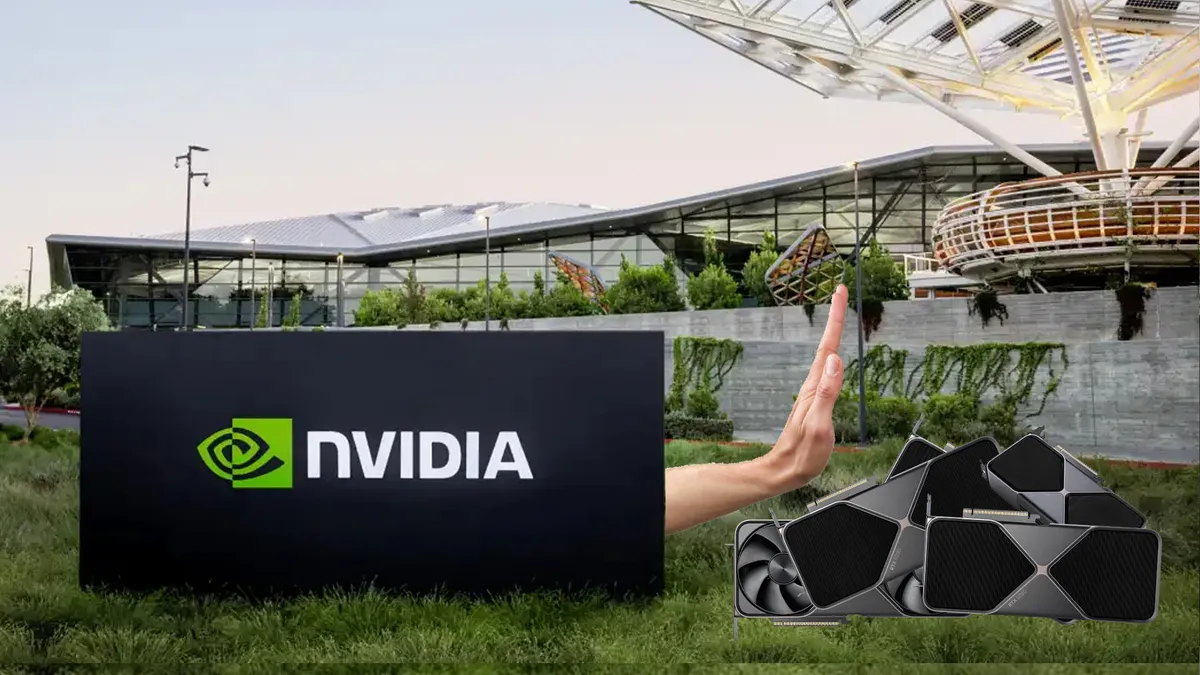
Congratulations, PC gamers - your beloved graphics card is no longer important enough to have its own category. According to PCGamesN, Nvidia has quietly folded its gaming GPU business into a broader "Edge Computing" division, which is basically corporate speak for "we make too much money from AI to care about your 4K framerates."
The move signals just how dramatically the balance of power has shifted inside Nvidia's empire. Data center revenue - think AI training, cloud compute, and basically every tech company panic-buying H100s - now absolutely dwarfs what gaming GPUs bring in. Your shiny GeForce card? A rounding error. A footnote. A participation trophy in Nvidia's financial statements.
From main quest to side quest
It wasn't long ago that gaming was Nvidia's flagship product line - the thing Jensen Huang would dramatically reveal under a leather jacket at every keynote. Now, gaming GPUs have been effectively demoted to a supporting role, bundled alongside other "edge" computing products as if your RTX 5090 is somehow in the same category as an industrial IoT sensor.
This isn't just a branding shuffle for the laughs, either. It reflects a genuine, seismic shift in who Nvidia actually sells to these days. When Microsoft, Google, Meta, and every AI startup with VC money are throwing billions at you for data center chips, the guy trying to hit 240fps in Valorant starts looking a lot less important to the bottom line.

What does this mean for gamers?
In practical terms, this restructuring raises some real questions about where gaming sits on Nvidia's internal priority list. If gaming GPUs are no longer a standalone business unit with dedicated reporting, does that mean less focus, less investment, and potentially less competitive pressure to keep consumer GPU prices from going completely off the rails? Asking for 50 million PC gamers.
The GPU market has already felt the squeeze of AI demand driving up VRAM costs and chip availability. Having gaming officially deprioritized within Nvidia's own org chart is not exactly a power-up for the average consumer. It's more of a debuff, really.
Nvidia built its legend on making GPUs that let gamers see prettier pixels. Now it turns out those pixels were just a tutorial level, and the real endgame was selling compute power to the robots. We've been speedrun any% the whole time.