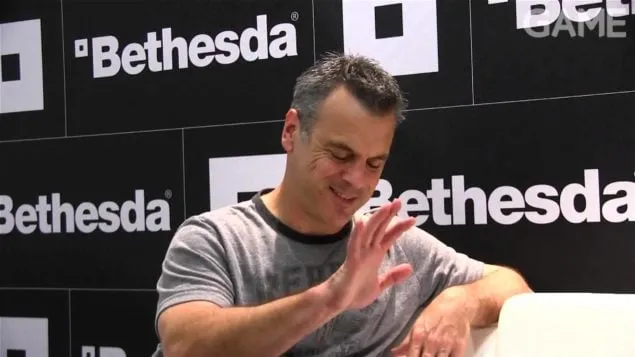
Pete Hines, who spent over two decades as the face of Bethesda's publishing arm, has shed some light on why he stepped away from the company following Microsoft's acquisition. Speaking candidly, Hines suggested his departure came down to authenticity - or a lack of it - in his role after the deal closed.
According to Video Games Chronicle, Hines indicated that continuing in his position felt like being part of something that wasn't genuine. That's a pointed statement from someone who was one of the most recognizable PR and publishing figures in the entire industry for years.
A long run at a changing company
Hines joined Bethesda back in 1999 and became the public face of franchises like The Elder Scrolls, Fallout, and Doom. He was the guy on stage at E3, the voice defending controversial decisions, and a constant presence in the studio's public-facing identity. When Microsoft completed its $7.5 billion acquisition of ZeniMax Media in 2021, the landscape around him shifted dramatically.
He officially announced his exit in November 2023, ending a 24-year run. At the time the departure was framed fairly quietly, but these latest comments suggest there was real internal friction driving the decision.
What 'not genuine' actually means
Reading between the lines here, Hines seems to be pointing at the tension that often emerges when a smaller, identity-driven publisher gets absorbed into a corporate giant. Bethesda had its own culture, its own way of doing things, and its own brand voice - much of which Hines helped build and represent. Fitting that into Microsoft's ecosystem, with its Game Pass priorities and platform strategies, is a different job entirely.
It's worth noting that Hines hasn't gone scorched-earth here. He's not naming names or throwing colleagues under the bus. The frustration he's describing sounds more existential than personal - a mismatch between who he was at Bethesda and who he'd need to be in a post-acquisition world.
For fans of Bethesda's output, especially those anxiously waiting on Elder Scrolls 6 and wondering what the studio looks like under Xbox's roof, Hines' comments add another layer to an already complicated picture. The people who made Bethesda what it was are slowly drifting away, and that's worth paying attention to.